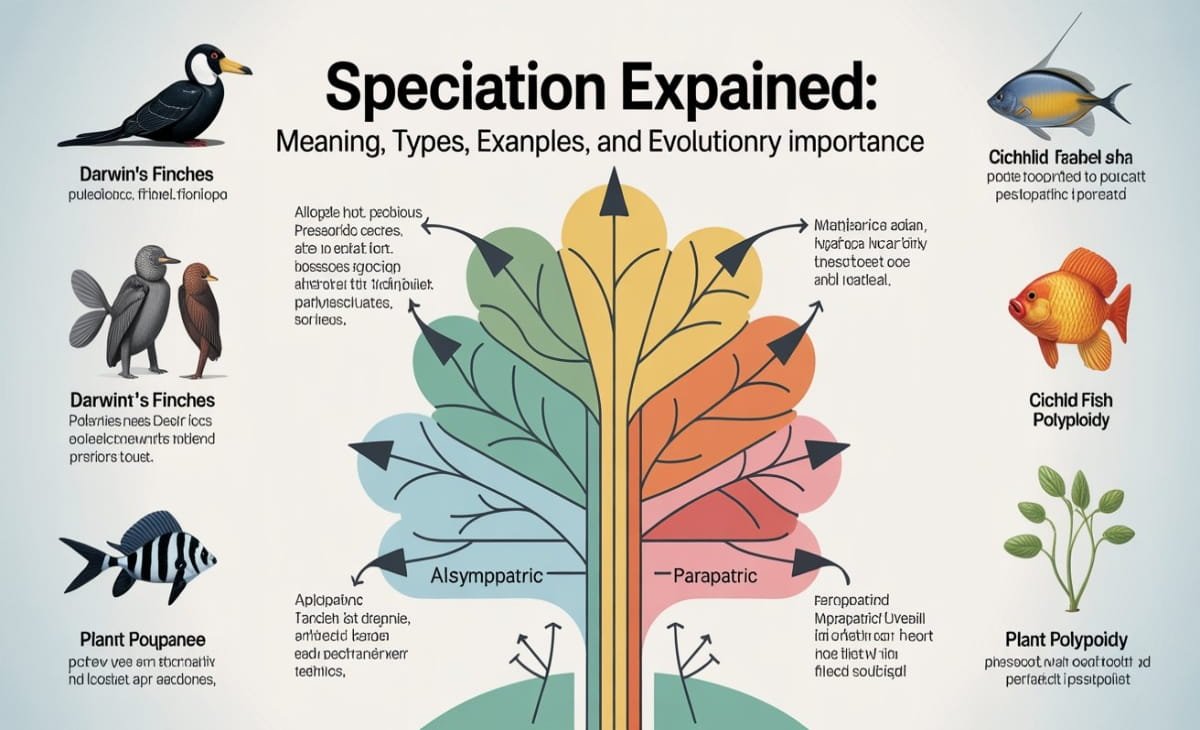
Speciering Explained: Meaning, Types, Examples, and Evolutionary Importance
Speciering is one of the most fundamental concepts in biology and evolutionary science. It explains how life diversifies, how new species emerge, and why Earth is home to millions of unique organisms. Without speciering, biodiversity as we know it would not exist. Every plant, animal, and microorganism traces its origins back to this evolutionary process.
At its core, It refers to the gradual process through which a single population splits and develops into two or more distinct species. This transformation does not happen suddenly. Instead, it unfolds over long periods through genetic variation, environmental pressure, and reproductive isolation. Understanding It helps scientists trace species origins, predict evolutionary patterns, and protect ecosystems facing environmental threats.
What Is Speciering?
It is the biological process by which new species arise from existing ones. It occurs when populations of the same species become isolated and evolve independently. Over time, genetic differences accumulate. Behaviours change, physical traits diverge, and reproductive mechanisms shift. When two populations can no longer interbreed successfully, speciering is considered complete. This process affects all forms of life—from bacteria to mammals. It is a driving force behind evolution and explains why organisms adapt so effectively to different environments.
For More Engaging Content Visit Our Website
How Speciering Occurs
It does not follow a single path, but it usually begins with isolation and ends with reproductive separation.
The general process involves:
- A population becomes divided or exposed to different environments
- Genetic differences build up over generations
- Reproductive barriers develop
- New species form
Environmental factors such as climate change, habitat fragmentation, and competition for resources often accelerate It. Charles Darwin’s theory of natural selection provides the foundation for understanding this process. Authoritative sources like Encyclopaedia Britannica and National Geographic explain how advantageous traits spread within isolated populations over time.
Main Types of Speciering
Biologists classify It based on how populations become isolated. Each type highlights a different evolutionary pathway.
Allopatric Speciering
Allopatric It occurs when populations are physically separated by geographic barriers such as rivers, mountains, or oceans. Once isolated, each population adapts to its environment. Over time, genetic differences increase until interbreeding is no longer possible.
Sympatric Speciering
Sympatric speciering happens without physical separation. Populations remain in the same geographic area but become reproductively isolated. This often occurs due to behavioral changes, mating preferences, or ecological specialization.
Parapatric Speciering
Parapatric speciering develops when neighboring populations evolve into distinct species while maintaining limited contact. Environmental gradients, such as differences in soil or climate, often drive this form of divergence.
Peripatric Speciering
Peripatric It occurs when a small group separates from a larger population. Because the gene pool is limited, genetic changes can happen rapidly, leading to faster It.
Real-World Examples of Speciering
It has been widely observed in nature. A classic example is Darwin’s finches in the Galápagos Islands. These birds evolved from a common ancestor but developed different beak shapes to exploit specific food sources. Over time, these adaptations led to multiple distinct species.
Another well-documented case involves cichlid fish in African lakes. Rapid environmental changes and selective mating resulted in hundreds of new species within relatively short evolutionary periods.
Even microorganisms undergo It. Bacteria exposed to different environments or antibiotics can evolve into genetically distinct strains, demonstrating how universal this process is.
Why Speciering Is Important
It plays a critical role in maintaining ecological balance and promoting biodiversity.
Its importance includes:
- Supporting ecosystem stability
- Allowing organisms to adapt to environmental change
- Driving evolutionary innovation
- Helping scientists understand extinction and conservation
From a conservation standpoint, understanding It helps identify vulnerable populations and protect emerging species before they disappear.
Factors That Influence Speciering
Several factors determine how quickly or effectively speciering occurs. Genetic mutations introduce variation into populations. When these variations improve survival or reproduction, natural selection favours them.
Environmental pressures such as climate change, habitat loss, and food availability also shape It. Behavioural differences, including mating calls or breeding seasons, can further prevent interbreeding. Even small changes can push populations toward complete reproductive isolation.
Speciering and Evolution
It is the engine that drives evolution forward. Evolution explains how traits change over time, while speciering explains how entirely new species form. Together, they answer fundamental questions about life:
- Why do species differ?
- How does life adapt to extreme conditions?
- What creates biodiversity hotspots?
By studying It, scientists gain insight into both the past and future of life on Earth.
Common Misconceptions About Speciering
Many people believe speciering happens suddenly. In reality, it usually takes thousands or millions of years. Another misconception is that humans no longer experience It. Evidence suggests evolutionary divergence continues, although at a subtle pace. It is also often confused with adaptation. Adaptation occurs within a species, while speciering results in the formation of entirely new species.
The Future of Speciering in a Changing World
Human activity is reshaping ecosystems worldwide. Climate change, urbanization, and pollution influence speciering in complex ways. In some cases, human-driven isolation creates new evolutionary pathways. In others, it leads to extinction before It can occur. Modern scientists study speciering not only to understand evolution, but also to guide conservation strategies in a rapidly changing world.
Conclusion
It is far more than a scientific term. It is the foundation of biodiversity, evolution, and life itself. By understanding how speciering works, we gain insight into the past, make sense of the present, and better prepare for the future of our planet. Whether you are a student, researcher, or curious reader, learning about It deepens your appreciation for nature. As ecosystems face growing pressure, this knowledge becomes essential for conservation, sustainability, and scientific progress.